

Mansion World–The works of Katie Williamson

Avenue B: Mansion World explores connection and the tension between intimacy and individuality—what first sparked this body of work?
Katie Williamson: I actually didn’t set out intending for it to be a body of work at all. My creative dry spells can go on indefinitely so when I’m inspired I don’t really linger on the “why”. I just went with the idea and started painting what I figured would be a one-off piece. The concept was something that developed with the work.
Avenue B: The idea of “losing ourselves in each other” feels central here. Was that drawn more from personal experience, observation, or something more abstract?
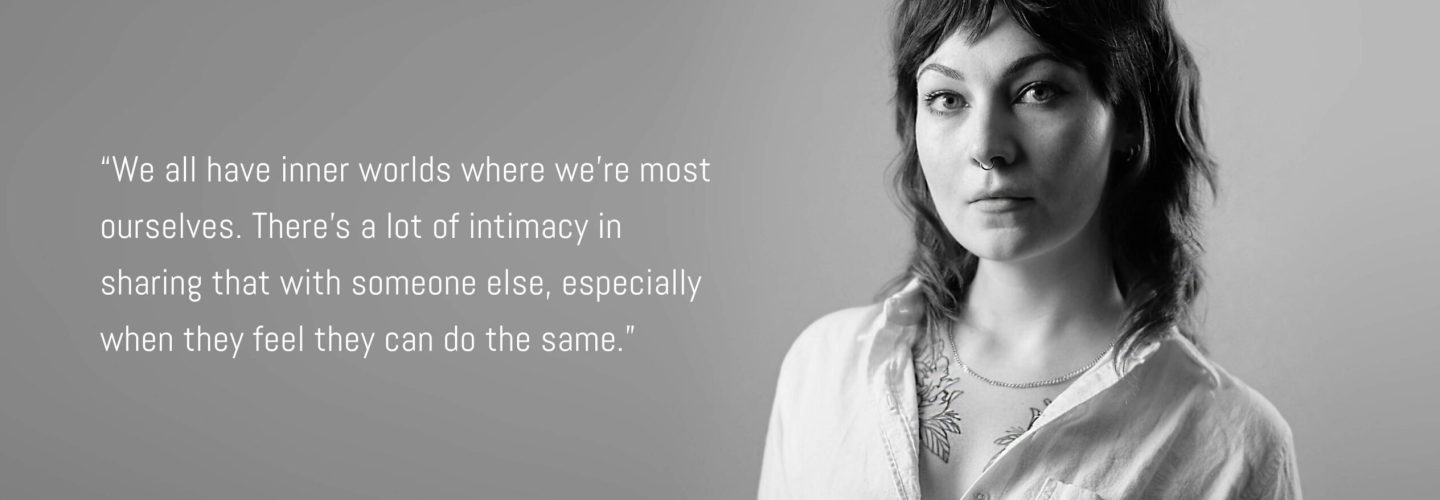
Katie Williamson: Both experience and observation. I think it’s fairly common to have had a relationship of some kind with that sort of intensity, even childhood friendships. We all have inner worlds where we’re most ourselves. There’s a lot of intimacy in sharing that with someone else, especially when they feel they can do the same. It’s a beautiful thing, but in sharing that space there’s a risk of merging entirely. The romance is feeling like the only two people in the world, and the underside is feeling like the only two people in the world.
Avenue B: Why the title Mansion World? What does that space represent to you?
Katie Williamson: It’s from a song by Deadsy that just happened to be my leave-on-repeat when I started the first piece. When I locked in I didn’t notice I’d let it run for like fourteen hours and it kind of became part of my process, to the point that I think it might’ve genuinely started some Pavlovian response to start painting. The title feeling exactly right for the series was one of those serendipitous things. To me it perfectly expresses the energy of the work–whimsical but a little unsettling, like an abandoned theme park.
Avenue B: The clown imagery throughout the work is really compelling—it feels playful on the surface, but there’s something more complex underneath. What drew you to that motif?”
Katie Williamson: A clown is a caricature and a symbol of performance, but there’s still a person underneath. I like the idea of capturing a momentary lapse in that performance or a breaking of character, letting the mask fall away to reveal something more intimate and real.The similarity to the “sad clown” trope isn’t lost on me, although it didn’t occur to me immediately. I never saw the subjects as sad exactly, or any particular emotion really. My intent is to illustrate something more nuanced than just the performance of happiness. I see the expressions as something to be interpreted by the viewer and not a fixed thing.The only constant is that whatever the feelings are, they’re honest.
Avenue B: And your use of color—these vibrant tones grounded by darker, moodier elements—can you talk about how you approached that balance?
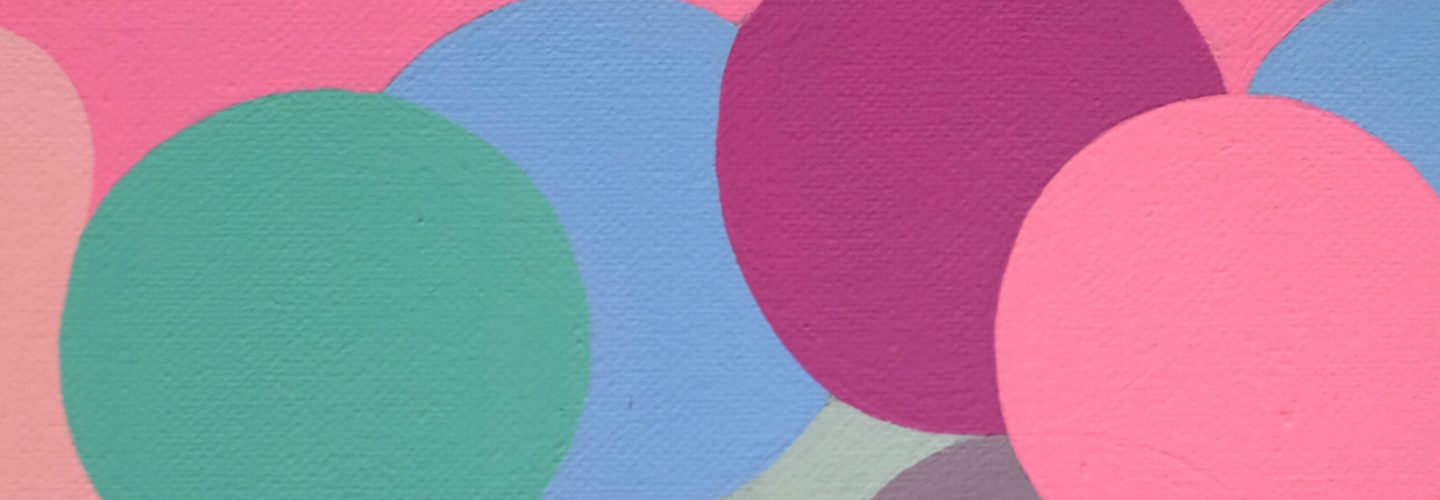
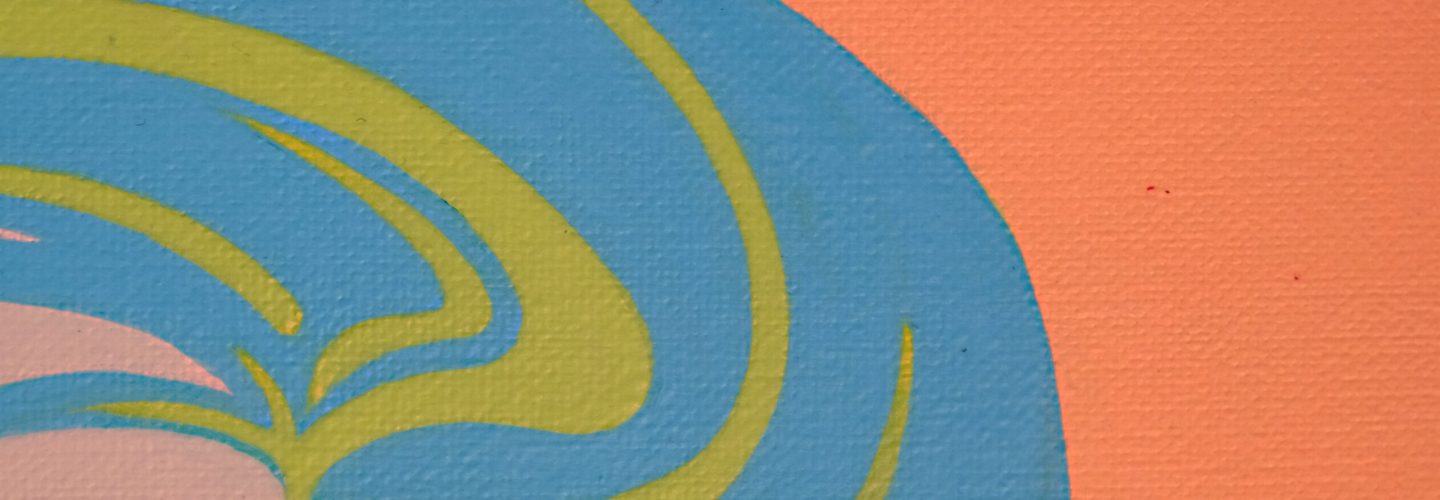
Katie Williamson: The development of the theme, compositions and use of color came together organically and made continuity easier as the work progressed. Adding depth to the work added depth to the concept and turned into an exploration of harmony and tension. The base color scheme of alternating brights and neutrals mirrors the respite of that unmasking amidst chaos, the balance softening the visual cacophony as a literal rest for the viewer’s eyes.
Avenue B: Are there recurring symbols or visual cues across the series that viewers should look more closely at?
Katie Williamson: Each piece has some kind of graphic element in groups of three. It was happening organically but when I noticed I started being more deliberate about it and continued it through the series. “3” means “I love you” in my family. My mom has always been a big source of encouragement artistically and it’s a little easter egg for her
Avenue B: You reference The Fool as a guiding influence—what aspects of that archetype resonate most with you?
Katie Williamson: To me the message translates as tough love regardless of if it’s being read upright or inverse. Calculated or not, no risk means no reward. It’s not a promise of the desired outcome, it’s about accepting that in order to grow you have to be brave and embrace change, or stay put and miss an opportunity for fear of the unknown.
Avenue B: The Fool carries both optimism and recklessness. How do you navigate that duality in your work?
Katie Williamson: The style doesn’t lend itself to a lot of detail, and what little there is was very selective. I see duality as a descriptor for a more obvious and easily identifiable difference, so maybe “two sides of the same coin” is closer. They’re not synonymous but optimism and recklessness do share a kind of overlap. In that sense I think it becomes a matter of perspective and a little more nuanced, so that’s how I chose to approach it visually.
Avenue B: Do you see vulnerability in relationships as more of a leap of faith or a conscious decision?
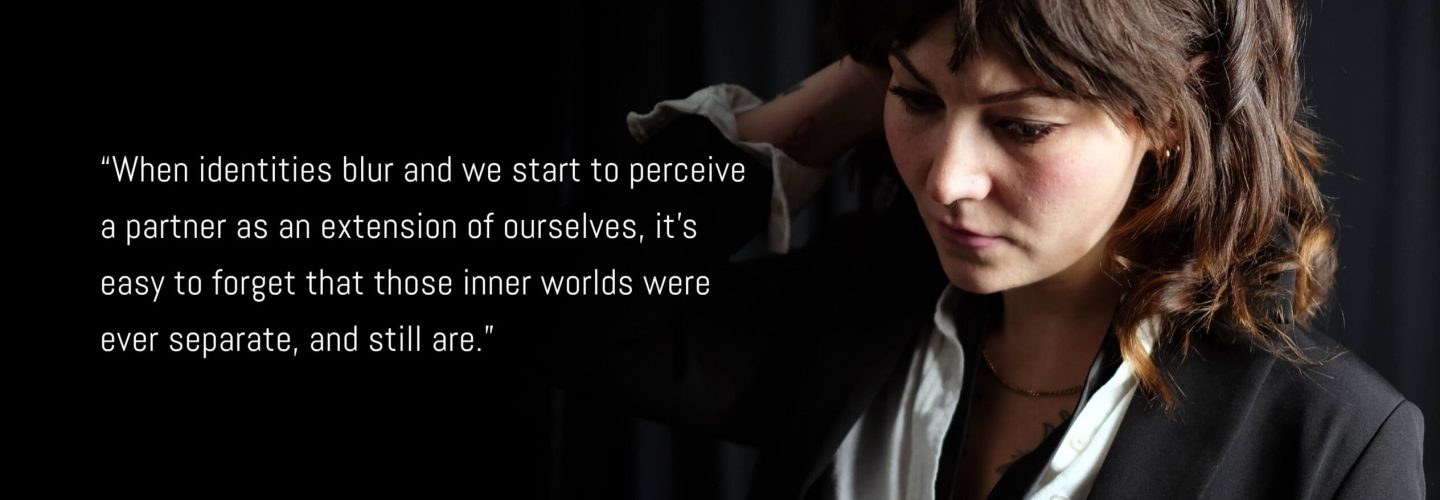
Katie Williamson: In regards to relationships I’d consider those the same thing, except “leap of faith” sounds more honest about having no idea what’s ahead. People have patterns but no one’s completely predictable. When identities blur and we start to perceive a partner as an extension of ourselves, it’s easy to forget that those inner worlds were ever separate, and still are. Understanding and respecting that free will despite the possibility of loss is centric to the series. With vulnerability, “leap of faith” is ultimately the only option.
Avenue B: Do you think vulnerability in relationships is more instinctual, or something we consciously choose?
Katie Williamson: I think it’s different for everyone in general, but also specific to each relationship they have. Time and experience tend to change peoples’ dispositions and approaches to relationships for better or worse. In this context it seems worth differentiating feeling vulnerable vs being vulnerable. I think feeling vulnerable is instinctual and not something we have control of, whereas being vulnerable is a choice. Not just the feeling of vulnerability but a willingness to share that.
Avenue B: Each piece captures a single intimate moment—how do you decide which moments are worth preserving?
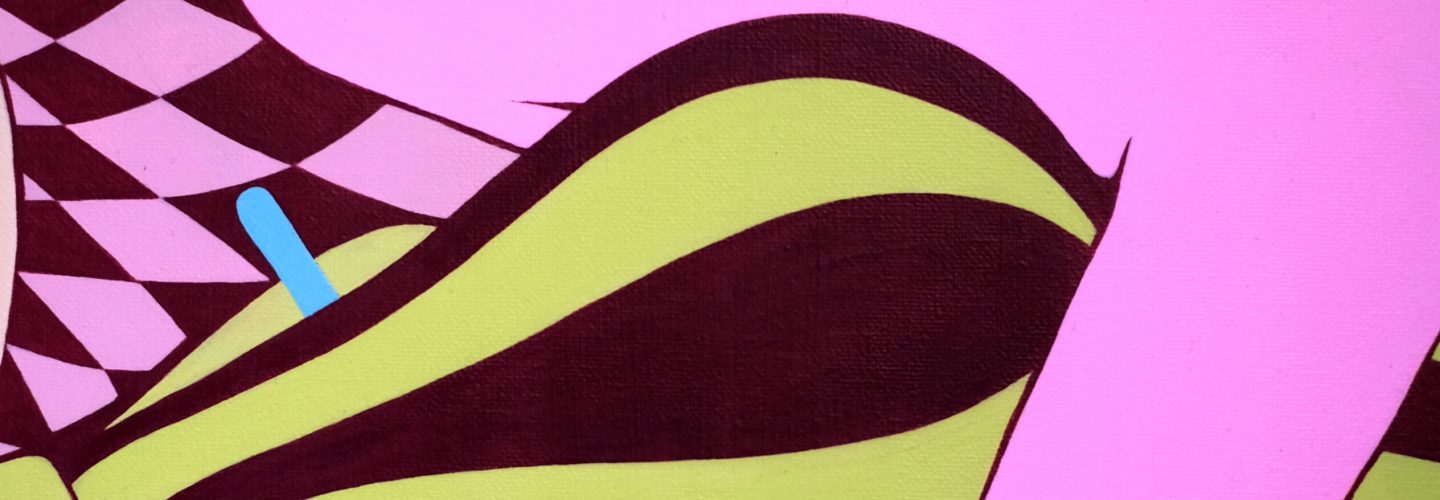
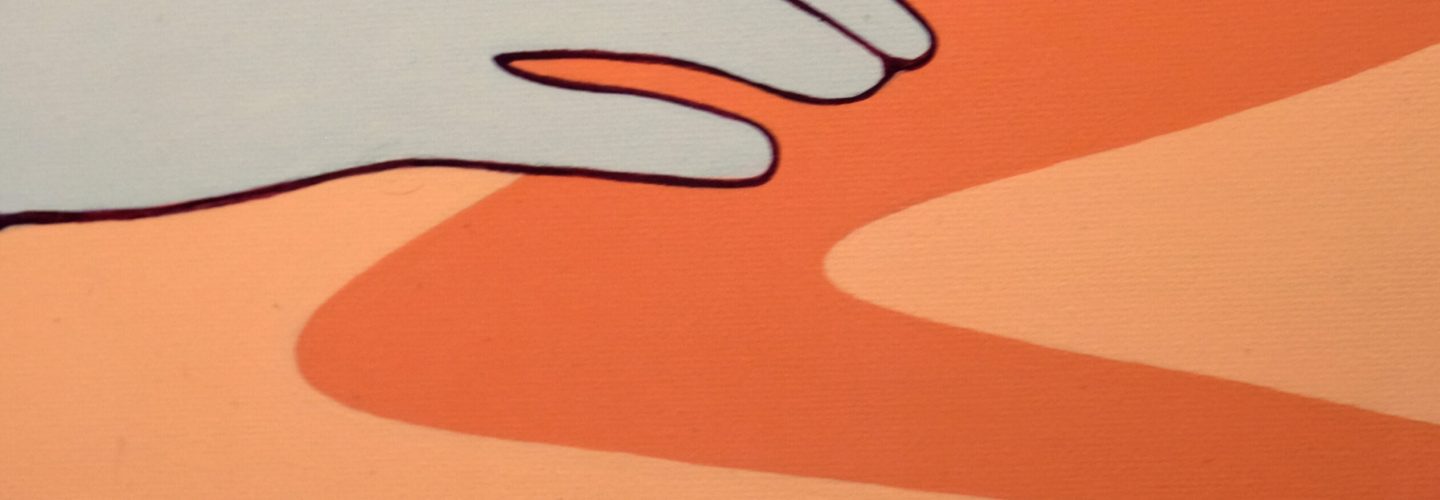
Katie Williamson: What I most wanted to preserve was the interior of the moment that the subjects are experiencing–separately and together. While the choices of action or setting were deliberate, it had more to do with the dynamic of the subjects and the energy.
Avenue B: Do your pieces usually start with a clear narrative, or do they evolve as you’re working?
Katie Williamson: Most of the time my work begins on impulse and the composition precedes the deeper meaning, if there is one. I might have an idea for a theme but it’s still almost exclusively visual without many specifics. It’s more important to me to follow the inspiration than to make sense of it. Nothing ever goes exactly as planned, so it’s fun to see what comes together organically through the process.
Avenue B: In creating these emotionally charged scenes, do you maintain a boundary between yourself and the work? If so, how?
Katie Williamson: To a degree. Because of my relationship with this particular project, it’s not possible to entirely separate myself from it emotionally. It wouldn’t be the body of work it’s developed into without that connection, but when I’m painting I’m a lot more focused on the technical side rather than the emotional one, at least consciously. I think conceptually the series is something a lot of people can identify with. It’s personal but not a self portrait, so to speak.
Avenue B: You mention that the viewer is sometimes included in these moments—how do you intentionally invite them into that space?
Katie Williamson: The use of eye contact with the viewer is meant to open that space, but the nature of that engagement is subjective.The only concrete descriptor I would use across the board is awareness.
Avenue B: What do you hope people feel when they step into Mansion World?
Katie Williamson: My hope is that they feel something, period.
Avenue B: The idea that love doesn’t always go as planned—but can still lead to something meaningful—is powerful. Has your perspective on that evolved during this series?
Katie Williamson: My perspective hasn’t really changed because I always saw it as something open ended. The definition of “meaningful” in this sense can be a lot of things, even if it’s just understanding.
Avenue B: How do you personally define “being seen” within a relationship?
Katie Williamson: It’s the feeling that a person sees who you are at your core and understands you, regardless of whether it’s a romantic relationship or not. Meaningful relationships are cultivated over time, but being “seen” isn’t something that develops later. It’s visceral, like chemistry but deeper. Recognition at first sight, maybe. It’s a conversation with someone who is sincerely listening, not just waiting for their turn to speak.
Avenue B: There’s an acceptance in your statement that paths may diverge—do you see that as loss, transformation, or something else entirely?
Katie Williamson: I think it depends on the specifics of how those paths diverge, but it can also be all of the above. Let’s say secret third thing.
Avenue B: Looking back on this body of work now, is there anything that surprised you during the process?
Katie Williamson: I wasn’t very intentional when I started the first piece and it showed. Not in a cool intuitive way, in a lazy way because it was. I thought about scrapping it. The only thing that had any depth for me was the facial expression. Having an emotional response to it was bizarre, particularly since that response was discomfort. I think that’s what made me continue. What I saw as this kind of silly half baked idea suddenly grew legs. I wasn’t going for any particular emotion in the painting and there was something unsettling about what came out organically. It was both an extension of myself but something entirely apart from me with its own energy. I’d never seen my work that way, and it felt like a disservice not to explore that.
Avenue B: And how does Mansion World differ from your earlier work?
Katie Williamson: My previous work is mostly realism, portraits specifically. Other than being centered around people, Mansion World is a complete digression from anything I’ve shared publicly, both stylistically and personally. Vulnerability and risk are the crux of the series, including how I feel in sharing it.
Avenue B: Where do you see your work evolving after this body of work?
Katie Williamson: The series is a symbol of growth for me, and that’s something I can physically see in the progression of the work. There are things here and there I’d do differently, but that growth has helped me be more gentle with myself and see learning experiences rather than mistakes. I’ve become more interested in following my instincts than making things look how they’re “supposed to”. It’s out of character for me to say, but there’s something fun about not knowing what’s next.